Sleep art, a sleep book, and a sleep solution for the hour before sleep.
A small catalog of objects designed against the neurobiology of sleep onset. Limited-edition prints for the wall in front of your bed. A book to absorb before the lights go out. Built on sleep science. Made by CLOSI.
Or, the email letter — once a fortnight, on what to look at before sleep.
Why your brain will not shut off at night.
You have done the things. The mattress is good. The phone is charging in another room, or close enough. You have taken the magnesium, the melatonin, the L-theanine. You have tried the meditation app and the breathing protocol and the weighted blanket. And you are still lying in bed at 11:47pm, staring at the ceiling, watching your brain produce thoughts you did not ask for.
This page is for that hour. The science of sleep onset is clearer than the wellness industry has made it sound. The retina, not the body, is the primary timekeeper. The visual cortex, not the prefrontal cortex, is what has to quiet first. The wall in front of your bed — the last thing you see before the lights go out — has more to do with how quickly you fall asleep than the supplement does. Most bedrooms get this part wrong, because most bedroom art is chosen for daytime reasons.
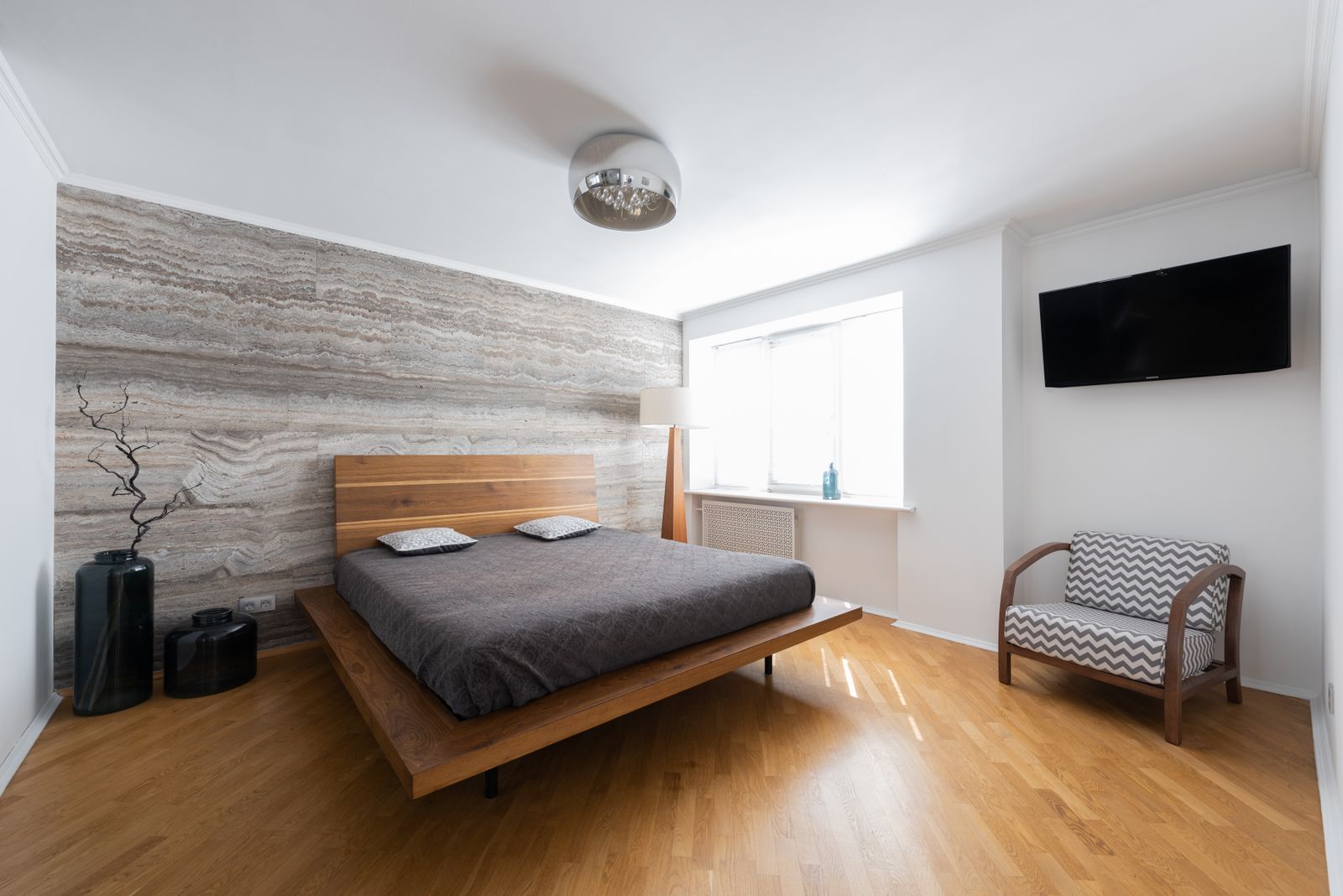
The wall in front of the bed
Sleep art.
Sleep art is a category we have coined for what should already exist: visual work designed against measurable physiological criteria for sleep onset. Low luminance. Low spatial frequency. Warm color temperature. Semantic emptiness — meaning, nothing for the interpretive cortex to chew on. Predictability. Stillness.
The category does not currently exist on the open market. The art on most bedroom walls — landscapes, ocean scenes, calming blue abstracts — fails every one of these criteria. Cool blues at 480nm are the strongest known suppressor of melatonin. Landscapes engage scene-construction networks in the visual cortex. The standard bedroom wall is, neurobiologically, a stimulant.
CLOSI Editions is the small catalog of prints we make instead. Each piece is a pigment-ink print on cotton rag, signed and editioned, designed to be the last thing you see before the lights go out.
What to read before bed
The sleep book.
The sleep art handles the eyes-open phase. The book handles what happens after the lights go out — the phase where the room is dark, the eyes are closed, and the brain, given silence and stillness, turns inward and begins producing thought.
The right book at this hour is not a thriller. It is not a self-help title structured to keep the reader engaged. It is a book that has already been absorbed, that returns to the reader in the dark, that crowds out anxious thought without itself being interesting enough to sustain attention. A piece of cognitive sleep art. Installed in the reader’s head and effective during the phase the print on the wall cannot reach.
This is what the CLOSI sleep book is built to do. Short chapters, low cognitive intensity, low informational density, a warm and unhurried voice, and content predictable enough that the mind settles. It ships in 2026.

As a system, not a pill
The sleep solution.
A sleep solution that depends on a single product is not a solution. It is a coping mechanism. The body’s transition into sleep is governed by three systems — the circadian, the homeostatic, and the perceptual — and a real solution has to address all three.
CLOSI is a sleep solution at the perceptual layer. It does not replace the mattress, the cooling pad, the supplement, or the therapy. It addresses the variable those products cannot reach: what your visual system is taking in during the hour before sleep, and the cognitive content the mind has to settle on once the lights go out. A sleep solution works when the bedroom is treated as a system. The print, the book, the lamp, and the protocol are how that system is built.
The Print
What you look at in the three to twelve minutes before your eyes close.
The Book
What returns to your mind in the dark, once your eyes have closed.
The science, briefly.
1. The retina contains intrinsically photosensitive ganglion cells (ipRGCs) that bypass image-forming vision and signal directly to the suprachiasmatic nucleus, the body’s master clock. These cells are most sensitive to light around 480nm — the cool-blue wavelength dominant in screens, daylight bulbs, and most cool-toned bedroom art.1
2. The visual cortex does not switch off when you close your eyes. It continues to process the residual content of what you were looking at moments before. A scene that was semantically rich — a landscape, a face, a narrative image — leaves the cortex with material to keep working on. A scene that was semantically empty leaves it with nothing.2
3. Sleep onset latency — the time between lights-out and stage 1 sleep — is meaningfully affected by the perceptual environment of the ten minutes preceding it. The art on the wall in front of the bed is not a decorative choice. It is, neurobiologically, a sleep variable.3
Questions readers ask.
What is sleep art?+
Sleep art is visual work designed against the neurobiology of sleep onset. Low luminance, warm color temperature, low spatial frequency, and semantic emptiness. It is made for the wall in front of the bed, and for the minutes before the lights go out. It is a category CLOSI coined because the category did not exist.
How does sleep art help you fall asleep?+
The visual cortex continues to process what you were looking at after your eyes close. A semantically empty image at warm low luminance leaves the cortex with very little to continue working on. The eye relaxes, melatonin is not suppressed, and sleep onset latency shortens. The effect is quiet. Over weeks, it is measurable.
What is the best art to put in a bedroom for sleep?+
Work that is dim, warm, low in spatial complexity, and narratively empty. Avoid cool blues near 480nm, landscapes that engage scene-construction networks, and high-contrast imagery. A print you can look at for a long time without being asked to think is what you want on the wall you face at the end of the day.
Is bedroom art with blue tones bad for sleep?+
Reflected blue light around 480nm is the most effective wavelength for suppressing melatonin, because that is the peak sensitivity of the ipRGC cells in the retina. Bedroom art that pushes cool blues into the perceptual environment during the hour before sleep works against the biology. Warm tones do not.
What is the sleep book about?+
The sleep book is designed to be absorbed before the lights go out and to return to the reader in the dark. Short chapters, low cognitive intensity, a warm voice, and content predictable enough that the mind settles. It is not a book about sleep. It is a book to read before sleep.
When does the sleep book come out?+
The sleep book ships in 2026. Readers on the letter are notified first, and the first print run is editioned. Pre-orders open through closi.com when the print run is finalized.
Is this a sleep solution that replaces medication?+
No. CLOSI is a sleep solution at the perceptual layer. It does not replace the mattress, the supplement, the therapy, or a conversation with a physician. It addresses the variable those products cannot reach: what the visual system is taking in during the hour before sleep.
Can sleep art help with racing thoughts at night?+
Racing thoughts at night are, in part, a visual cortex that has been given too much to process and a mind that has been given too little to settle on. Sleep art addresses the first half. The sleep book addresses the second. Together, they quiet the hour before the lights go out.
Why do you not sell on Amazon?+
The objects are editioned and the brand is built on the surface they are seen on. Amazon optimizes for search and speed. The prints and the book are not speed objects. They are read slowly, in a room, at the end of the day.
How is this different from a meditation app or a sleep tracker?+
An app asks for attention during the hour it is meant to quiet. A tracker measures the night but does not change what happens before it. Sleep art and the sleep book change the perceptual input of the room itself, and then ask nothing else of the reader.
The letter.
Once a fortnight, an essay on what to look at, what to read, and what to remove from the room you sleep in. No promotions. No lists. Slow reading.
Unsubscribe at any time. We do not share your address.